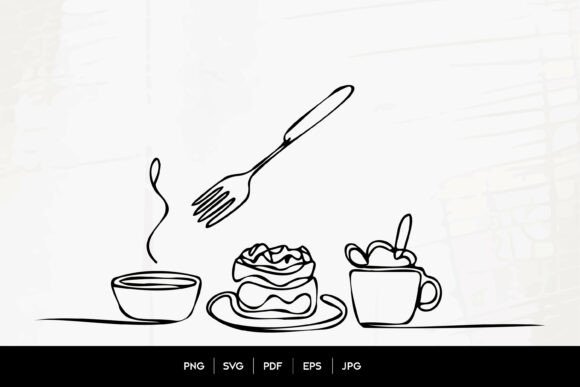
An Embroidery Designer's Look at Dessert and Coffee One Line Art
When a new embroidery file lands on my desktop, my first question isn’t just “What is it?” but “Where does it belong?” Which fabric, which project, which customer’s face will light up when they see it stitched? Today, I’m looking at Dessert and Coffee One Line Art, and my mind immediately goes to a custom tote bag for a friend’s birthday. She’s a bakery owner, a coffee enthusiast, and someone who appreciates clean, modern aesthetics. This single-line graphic feels like it was made for her.
The First Impression: Sweet Simplicity with a Modern Edge
The beauty of a one-line art style is its deceptive simplicity. This dessert and coffee graphic isn’t overly detailed, but its continuous flow creates a sense of elegance and completeness. The mood it sets is light, sophisticated, and warmly inviting. It’s not a loud, cartoonish illustration; it’s the kind of visual you’d see on a well-branded cafe’s apron or a minimalist kitchen towel in a boutique. The layout is inherently balanced, with the elements linked by that single, unbroken line, giving it a cohesive visual personality that feels both artistic and approachable.
For embroidery, this translates into a design that relies on stitching clarity and clean lines. It naturally belongs to projects where subtlety adds value. Think of a custom embroidered sweatshirt for a cozy weekend brunch, a pillow cover in a sunlit reading nook, or the corner of a linen apron for a home baker. It’s less about filling space and more about creating a focal point of quiet charm.
Where This Design Performs Brilliantly in Real Projects
In practical application, Dessert and Coffee One Line Art shines on items where its clean lines can be appreciated. For small business merchandise, this graphic is a fantastic asset. An Etsy seller specializing in cafe-themed gifts could use it on tea towels, tote bags, or even as a delicate accent on a baby’s onesie for a foodie family. As a personalized gift, embroidered onto a cotton canvas bag with the recipient’s name added in a complementary script, it becomes uniquely thoughtful.
I envision it working beautifully for:
- Apparel decorators on the breast pocket of a polo shirt for a coffee shop staff uniform.
- Crafters making a set of embroidered patches for a culinary-themed scrapbook or jacket.
- Creative entrepreneurs using it in printable mockups to sell digital embroidery files or as a branding element on their own packaging.
The design’s strength is its versatility within a specific niche—anything connected to baking, cafes, treats, and warm hospitality. Stitched onto a blanket or a nursery decor item for a family that loves their kitchen, it adds a personal touch without being overly childish. For holiday gifts like a Christmas kitchen towel or a Valentine’s Day treat bag, it’s instantly recognizable and delightfully themed.
Caution Zones: Where to Pay Extra Attention
No design is universally perfect, and the one-line style demands some practical consideration. The primary concern is scale. Because it’s a continuous line, shrinking it down for a very small hoop size, like on a cap’s curved surface or a tiny baby item, could muddle the details. Those intricate corners where the pastry and cup connect need room to breathe to maintain their clarity.
Also, be mindful of fabric texture and color. On a highly textured fabric like a waffle-knit towel, the fine lines might get lost. On dark fabric, your thread color choice is paramount; a pale thread might not pop enough, requiring a bold, contrasting color to keep the design legible. For stretchy fabrics like t-shirts, a good stabilizer is non-negotiable to prevent the single line from distorting under tension.
Finally, consider the end use. On products that will undergo frequent washing, like aprons or kitchen linens, a denser satin stitch for the outline might be more durable than a thinner running stitch, depending on your machine embroidery settings. Always check how the design translates to the actual stitch density.
How This Design Elevates Your Finished Product
Using a design like this isn’t just about decoration; it’s about communication. When a customer sees Dessert and Coffee One Line Art cleanly embroidered on a product, it speaks to a certain visual appeal—it looks intentional and professional. This builds customer trust and enhances the perceived value of your handmade product. For a small shop product, it contributes to brand consistency if you’re cultivating a modern, culinary-focused aesthetic.
The giftability is high because it’s thematic without being generic. It feels like a curated choice, not a mass-market one. This can directly increase buyer engagement in your Etsy listings or craft fair booth—people connect with clear, attractive themes. For commercial embroidery projects, it offers a ready-made, stylish asset that saves design time and delivers a polished look.
A Designer’s Practical Notes Before You Hoop It Up
Before committing this to a final project, here’s my standard advice, born from years of trial and error:
- Test on scrap fabric first. Use the same material you intend for the final product. This reveals how the lines look with your chosen thread and stabilizer.
- Check thread color contrast. Run a simple test on both light and dark background scraps. Does a cream thread work on dark denim? Maybe a cocoa brown is better.
- Review the design in black and white. Sometimes viewing a mockup without color helps you assess the pure shape and line integrity.
- Confirm your hoop size. Make sure the design dimensions fit comfortably on your target area, leaving a clean margin.
- Inspect the small details. Zoom in on the provided files (PNG, SVG, EPS, PDF, JPG) to see if any spots are too tight for your machine’s stitch width.
- And crucially: Confirm the licensing. Before selling finished items or incorporating this into your own digital products, understand the terms of use for this graphics asset. Does it allow for commercial use of your embroidered products? Always verify.
In essence, Dessert and Coffee One Line Art is a lovely, niche-ready design. It won’t be the loudest statement on a garment, but in the right project—a boutique tea towel, a personalized tote for a pastry chef, a subtle cap for a coffee lover—it will be the perfect, understated note that makes the whole piece sing. It’s a design that asks for a thoughtful application, and in return, offers a beautifully professional and charming result. That’s a trade I’m always happy to make.